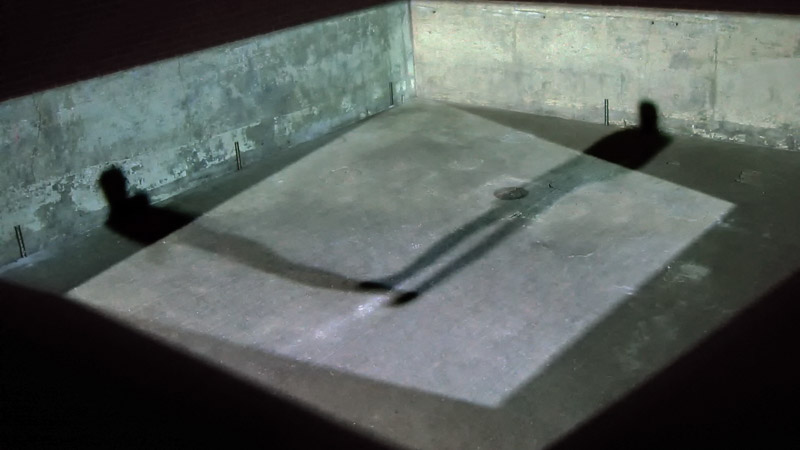
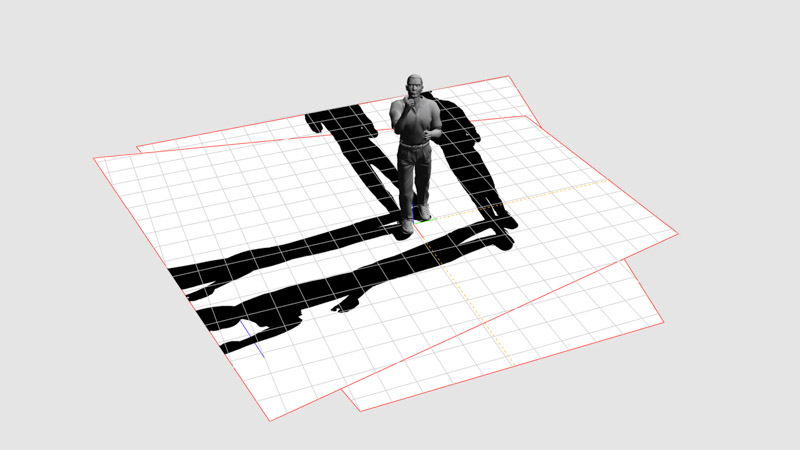
As participants enter the dark
installation space, they see a large empty area of the floor
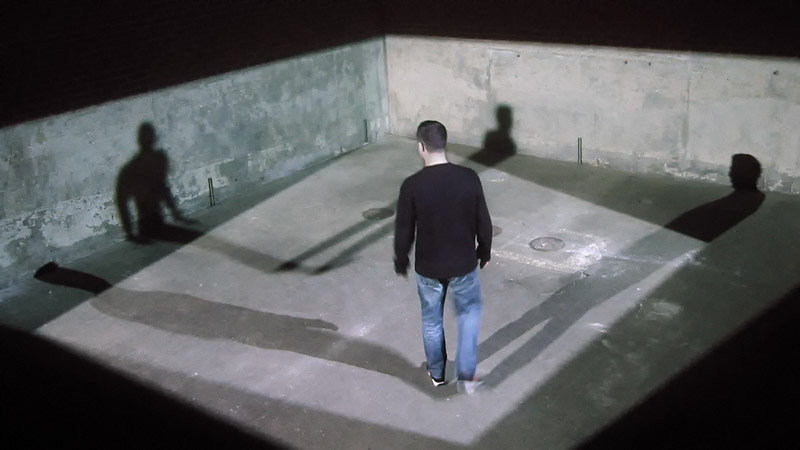
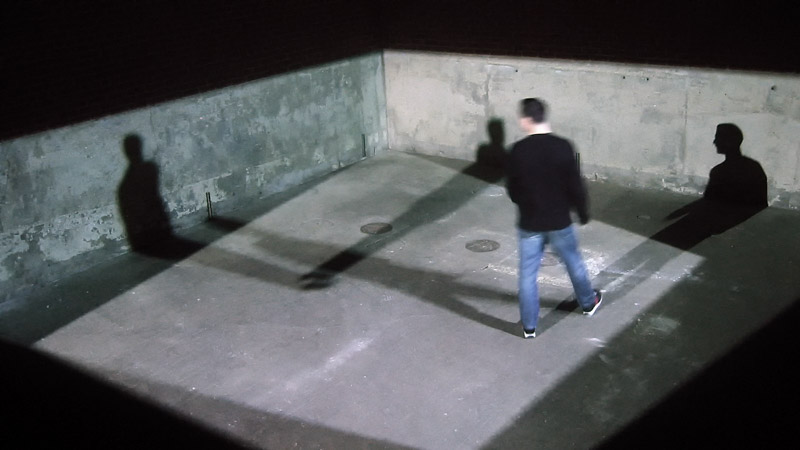
lit with projectors. When participants walk into the lit area,
their shadow is thrown on the ground. Participants then notice
other shadows slowly entering the lit area. These disembodied
shadows look like the participants’ own. The virtual shadows
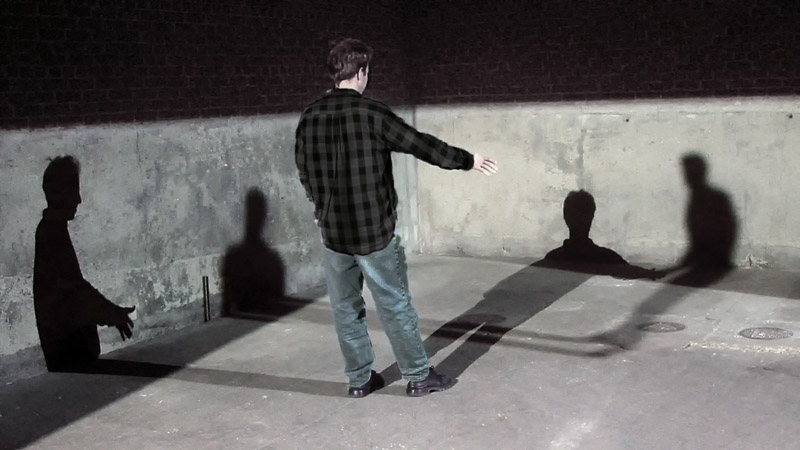
slowly walk towards the participants. If the participants run
away, the shadows will follow. If the participants move towards
the shadows, they will retreat. If the participants stay relatively
still, the shadows will slowly approach. The shadows will then
position their feet directly on top of the participants’.
This act merges the participants’ own shadows with the
virtual shadows. Once merged, the virtual shadows disappear.
There are no artificial controls
or prescribed manner of interaction. This transparent interface
allows viewers to act naturally.
Real-time, computer generated 3D
graphics and video sensing are used to produce this work of
interactive light.
Our shadows feel as if they are
extensions of our bodies. These shadows are the absence of light
due to our presence. This installation removes the presence,
leaving only the representative void. The autonomous shadows
create the intense sensation of both presence and absence simultaneously.
Shadow merges viewer and artwork, the real and the virtual,
into one entity. Along with the conceptual, there is a strong
emotional and intimate component to this piece. The feeling
of both the presence and absence of another human being is visceral
and ghostly. In a sense, this piece functions as a quiet, interactive,
anonymous memorial.
Shadow was created while in residence
at Eyebeam NYC. The installation was featured on CBS News and
CNN and was chosen to represent the USA at Artiade, an exhibition
at the Athens Summer Olympic Games 2004. We are currently scheduling
future exhibitions.
|